Tracing Contested History: How Museums and Communities Document Artifact Provenance Together

Opening Museum Doors to Uncover Hidden Histories Together

Provenance research is often described as the study of who owned an object and when. That definition is necessary, but it is not sufficient. A meaningful provenance record follows an object”s full life journey, from its creation and early use through exchange, inheritance, ritual practice, displacement, sale, donation, and museum storage. It asks not only whether a transfer was legally documented, but also what the object meant to the people who made, used, cared for, or lost it.

For much of the museum”s history, those questions were answered primarily through institutional records, dealer files, auction catalogues, and the statements of collectors. Community knowledge was frequently treated as supplementary, if it was recorded at all. This is changing. Museums, source communities, and diaspora groups are building more transparent archival practices in which local expertise, oral history, language, cultural protocol, and lived experience can stand beside accession ledgers and legal documents. Public programs, including museum events and educational seminars, can provide practical entry points for dialogue, but lasting trust requires that community knowledge also shape the official record.
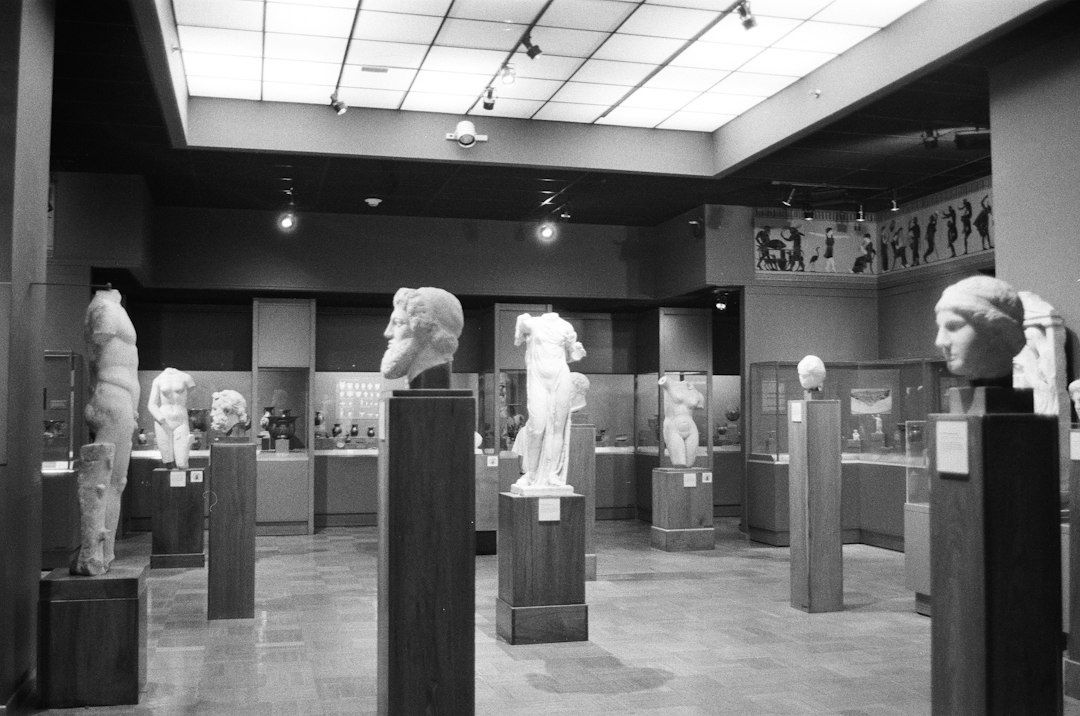
Black-and-white museum gallery displaying classical sculptures and artifacts
Responsible provenance research connects archival evidence with the knowledge and lived experiences of the communities linked to museum collections.

Understanding Provenance Beyond Legal Ownership

At its foundation, provenance research reconstructs an object”s ownership history and movement over time. The ICOM Code of Ethics places this work within broader professional responsibilities concerning acquisition, legal compliance, due diligence, illicit traffic, restitution, repatriation, security, and responsible collections management. These standards make clear that museums are not simply warehouses of attractive things. They hold objects in public trust and must be able to explain how collections were acquired, what is known about their histories, and where uncertainty remains.

A chain of title is one important part of that explanation. It may identify a maker, dealer, collector, auction house, donor, or previous institution, with dates and supporting documents. However, a transactional record can leave major questions unanswered. A deed of gift may show when an object entered a museum without explaining how it was removed from a community, whether its use was restricted, or how it was understood before entering the art market. The Denver Art Museum notes that provenance research draws on object records, scholarship, exhibition histories, newspapers, photographs, auction records, ancestry resources, and databases that identify lost or suspiciously traded works. Gaps may reflect war, fire, displacement, poor recordkeeping, or unlawful activity, and each gap requires careful interpretation rather than automatic conclusions.

Ethical standards help museums respond responsibly when records are incomplete or when an object carries cultural obligations that ordinary ownership documents cannot express. Responsible practice includes distinguishing verified facts from informed claims, documenting disagreements, avoiding premature certainty, and creating accessible ways for communities to challenge or supplement the record. It also means recognizing that a museum”s legal possession does not always settle questions of moral authority, ceremonial access, or the right to determine how an object is described and displayed.

  • Document the full timeline: Record creation, use, movement, exchange, collection, and institutional custody where evidence exists.
  • Separate evidence from interpretation: Identify which statements come from written records, oral testimony, material analysis, or institutional inference.
  • Investigate ethical concerns: Review possible coercion, looting, colonial extraction, wartime displacement, and culturally restricted materials.
  • Invite correction: Provide clear contact routes for source communities, researchers, and members of the public to contribute information.
  • Keep the record open: Treat provenance as an ongoing research file rather than a finished paragraph written at accession.

Decolonizing the Archive Through Critical Cataloging

Cataloguing systems can appear neutral because they organize information into orderly fields. In practice, the categories and terms selected by earlier curators often reflected Eurocentric assumptions about race, geography, gender, religion, art, and ownership. Indigenous objects could be reduced to generic labels, ceremonial items described as decorative art, and living communities placed in the past tense. Names could be misspelled, translated without explanation, or replaced by colonial geographic terms. When those descriptions are copied into databases, exhibition labels, and search engines, an inaccurate interpretation can become difficult to dislodge.

Critical cataloging addresses these problems by examining not only the wording of a record but also the structure that determines what can be recorded. Research on museum databases has shown that systems may restrict non-Roman scripts, separate community knowledge from the main object record, or lack fields for cultural protocols and Indigenous authority. Collaborative models make room for original names, multiple languages, community-preferred terminology, seasonal or ceremonial restrictions, and statements about who may view or reproduce an image. Consultation can also correct seemingly small errors with significant consequences, such as misidentifying a figure or confusing a community”s material tradition with that of a neighboring group.

Legacy cataloging practice Collaborative cataloging approach
Uses a single institutional description as authoritative Records institutional research alongside source-community knowledge and identified areas of disagreement
Prioritizes object type, date, and market history Includes use, relationship, language, protocol, maker knowledge, and community significance
Applies broad or outdated geographic and cultural labels Uses current community names, original terminology, and transparent explanations of historical terms
Assumes public access is always appropriate Recognizes culturally restricted information and community-defined access conditions
treats the database as an internal management tool Uses the database as a shared accountability and knowledge resource

Decolonizing cataloging does not mean deleting historical descriptions without explanation. It means preserving evidence of how an object was previously classified while clearly identifying harmful, inaccurate, or obsolete language and providing better context. This approach protects research history while preventing inherited terminology from being presented as unquestioned truth. It also requires museums to assess whether their software can support community authority, access controls, multilingual records, and ongoing revision.

Practical Frameworks for Community-Led Research

Community-led provenance research begins with an invitation that is specific, respectful, and properly supported. General requests for “feedback” can place an unreasonable burden on elders, cultural workers, and researchers, especially when an institution has already made decisions about access, scheduling, or interpretation. A stronger process explains which objects are under review, what questions remain, how information will be used, and what authority the community will have over resulting records and displays.

Physical access matters. Museums can arrange research visits to storage areas, conservation studios, libraries, and registration files, while providing interpreters, accessible facilities, travel support, and sufficient time for cultural protocols. Digital access can extend participation when travel is difficult, but it should not become a substitute for meaningful institutional investment. Oral histories should be recorded with consent and linked to the relevant object records, with clear terms governing attribution, future use, privacy, and withdrawal where appropriate.

  1. Prepare before the visit: Identify the collection”s history, gather existing records, flag sensitive materials, and provide a plain-language research summary.
  2. Share authority at the outset: Agree on who may handle, view, name, photograph, interpret, or reproduce each object.
  3. Invite multiple forms of evidence: Place oral testimony, language knowledge, family records, maps, songs, and lived traditions alongside accession and conservation documents.
  4. Record uncertainty honestly: Preserve differing accounts and explain why a conclusion remains provisional when the evidence cannot resolve it.
  5. Return results: Provide communities with updated records, images where permitted, research copies, exhibition drafts, and opportunities to review public language.
  6. Fund the relationship: Pay researchers and cultural advisers, support travel and technology, and budget for continued consultation after the initial project ends.

Sustainable partnership also depends on staffing. Registrar, archivist, collections, education, and conservation roles all influence how community knowledge enters institutional practice. Employment pathways can help connect regional expertise with museum work, including municipal opportunities such as employment, internships, and volunteer opportunities. Such pathways should not treat community members as unpaid sources of knowledge. Fair compensation, training, shared credit, and opportunities for leadership are essential parts of ethical collaboration.

The need for long-term support is especially clear when collections face crisis. After the catastrophic October 2024 flood that affected the Roswell Museum, collections work included conservation planning, documentation, care for damaged and unaffected materials, and responsibilities connected with Native American Graves Protection and Repatriation Act consultation. The example demonstrates that provenance is not an isolated research task. It is connected to emergency preparedness, storage, conservation, repatriation, accessibility, and the institutional capacity to maintain accurate records under pressure.

Connecting Diaspora Knowledge with Material Culture

Diaspora communities often hold evidence that formal museum files cannot provide. Family memories may identify a maker whose name was never recorded. A remembered ceremony may explain why an object was wrapped, repaired, or kept from public view. Community members may recognize a pattern, tool, script, or material process that a distant cataloguer interpreted incorrectly. These forms of knowledge can clarify not only where an object came from, but also how it traveled and what relationships shaped its meaning.

The University of Oxford”s “Astrolabes and Diaspora” project illustrates the value of looking beyond the first maker and final collector. Scientific instruments can pass through generations of users, traders, admirers, inheritors, and donors across different societies. Focusing only on the purchase that brought an astrolabe into a museum can obscure the human history in between. Collaborative research can recover those intervening experiences, while examples from the American Alliance of Museums describe source-community review that improved documentation of more than 1,500 works and corrected the identification of an image on an Acoma jar.

  • Makers: Community knowledge may restore names, workshops, family lines, and local techniques omitted from market records.
  • Ritual uses: Elders and cultural practitioners can explain functions that written descriptions reduced to ornament or general symbolism.
  • Routes of movement: Diaspora memories can connect objects to migration, trade, religious networks, conflict, or forced removal.
  • Language and meaning: Original terms can reveal distinctions that disappear in translation or broad museum categories.
  • Future care: Communities can advise on handling, storage, display, reproduction, and access in ways that protect cultural integrity.

When museums surrender sole interpretative authority, they do not abandon scholarship. They make scholarship more accurate, accountable, and responsive to evidence that institutional systems have historically overlooked. Shared authority can improve exhibitions, strengthen conservation decisions, reduce harmful language, and help visitors understand that an object”s meaning is not fixed by the moment it entered a collection. The goal is not to replace one authority with another, but to create a documented process in which responsibilities and decisions are visible.

Building an Inclusive Future for Cultural Stewardship

Transparent provenance research is an ongoing relationship, not a one-time audit completed when a label is rewritten or a database field is filled. New evidence may emerge through family archives, language revitalization, scientific analysis, or conversations with communities whose access was previously restricted. Museums should publish what is known, identify what remains uncertain, explain how community contributions shaped the record, and update entries when responsible new information becomes available.

Visitors, researchers, and local groups can support this work by asking museums how provenance was established, whether source communities were consulted, and how corrections can be submitted. Researchers can cite community contributors, follow access protocols, and avoid reproducing restricted images or outdated terminology. Community organizations can request collection reviews, propose language and interpretation, and seek formal agreements that clarify compensation, authority, and continuing access. Open databases are most valuable when openness includes accountability, context, and respect for information that should not be made universally public. Through shared stewardship, museums can become places where difficult histories are not concealed or simplified, but carefully documented with the people whose lives remain connected to the collections.
Designing for All Senses: How Contemporary Galleries Approach Neurodiverse Access

Rethinking the White Cube for Every Mind

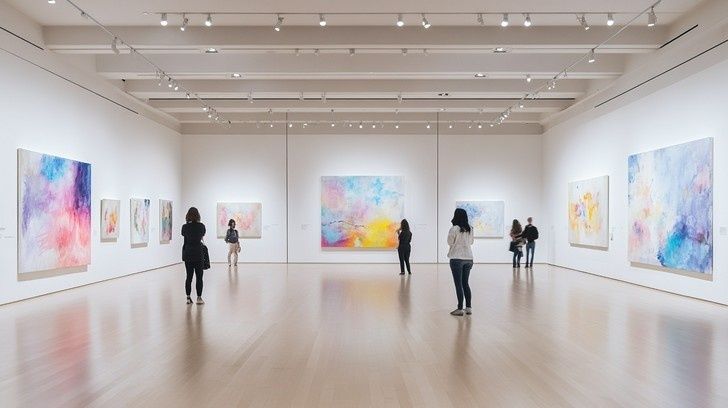
The modern gallery often presents itself as a calm, neutral setting, yet the traditional white cube can be anything but restful. Hard surfaces create sterile echoes, bright lighting produces glare, and open rooms may offer few places to pause or recover. For visitors with autism, ADHD, sensory processing differences, anxiety, or related access needs, these conditions can turn an otherwise meaningful cultural visit into an exhausting exercise in managing the environment.

Neurodiversity matters because sensory processing differences affect a substantial part of the public. Research discussed in recent exhibition design research places the neurodiverse population at roughly 10 to 15 percent globally. That is not a small specialist audience. It includes visitors, families, artists, employees, educators, and decision-makers. Creating access therefore requires more than offering a sensory-friendly morning once a month or providing a downloadable checklist. It requires community-informed planning that considers sound, light, movement, texture, communication, staffing, and visitor choice from the earliest architectural and curatorial decisions.

Moving Away from Deficit Based Accommodations

A deficit-based approach treats neurodivergence as an individual problem to be managed. A visitor is expected to request an adjustment, explain a need, or adapt to a building designed around someone else”s sensory preferences. Token programs can be valuable first steps, but they often leave the main institution unchanged. A more durable model assumes that people have different ways of processing information and that the gallery has a responsibility to provide multiple routes into the experience.

This shift is consistent with the direction of international museum policy. The International Council of Museums” updated definition, approved in Prague in 2022 by 92.41 percent of votes, describes museums as institutions that serve society, remain open and accessible, foster diversity and inclusion, involve communities, and provide opportunities for education, enjoyment, reflection, and knowledge sharing. Accessibility is therefore not an optional service added after an exhibition opens. It is part of the museum”s public purpose.

Neurodivergent-led organizations, including The Neurodiverse Museum, emphasize presumed competence and identity-affirming practice. In practical terms, this means asking neurodivergent advisors to shape decisions rather than consulting them only to approve a finished plan. It also means paying contributors, recognizing different communication preferences, and measuring success through visitor experience rather than attendance alone.

  • Design with people, not merely for people. Include neurodivergent visitors, artists, staff, and advocates at concept, prototype, and evaluation stages.
  • Offer choice instead of a single correct route. Visitors may need different levels of sound, light, social interaction, information density, and physical engagement.
  • Assume competence. Avoid infantilizing language and make access information available to all visitors without requiring disclosure.
  • Review the whole institution. Front-of-house procedures, ticketing, toilets, cafes, cloakrooms, wayfinding, and emergency arrangements all influence access.

Acoustic Zoning and Visual Respite in Contemporary Floorplans

Sound is often treated as a secondary design issue, even though it can determine whether a visitor remains in a gallery. Conversations, alarms, videos, school groups, ventilation systems, footsteps, and reverberation can combine into an unpredictable sensory load. Instead of placing a loud interactive installation beside a quiet contemplative work, designers can create gradual transitions. Textiles, acoustic panels, bookshelves, planted areas, angled walls, and carefully selected floor finishes can soften movement between zones.

A neuro-inclusive floorplan does not need to make every room silent. It should make sensory conditions legible and give visitors meaningful control. A map can identify spaces with amplified sound, reflective surfaces, strong color contrast, darkness, flashing images, or crowding. Staff should also understand that a quiet room may still be difficult if lighting flickers, chairs scrape across the floor, or visitors cannot see who is approaching.

Typical gallery layout Neuro-inclusive alternative
Sudden movement from a quiet room into a loud audiovisual installation Buffer zones with clear warnings, softer materials, and a gradual increase in sound
Uniform bright lighting with glare on labels and polished surfaces Adjustable, diffused lighting with lower-intensity options and reduced reflections
Open circulation with no obvious place to pause Visible seating, side alcoves, and low-stimulation areas along the main route
One crowded entrance serving every visitor Alternative entry routes, timed capacity management, and clear waiting information

Decompression lounges are particularly useful when they are treated as part of the visitor journey rather than as a hidden medical room. A successful lounge may include subdued lighting, comfortable seating, clear visual boundaries, low noise, and simple information about how long the space can be used. It should remain close enough to the exhibition to support re-entry, while avoiding the impression that visitors must leave the cultural experience altogether. The best layouts provide several smaller respite points as well as one dedicated room, because not everyone needs the same level of withdrawal.

Tactile and Multi Sensory Interpretation Beyond Sight

Interpretation becomes more inclusive when visitors can encounter an artwork through more than printed text and visual observation. Three-dimensional relief panels can communicate composition, spatial relationships, or architectural form. Physical material swatches can help visitors understand the difference between stone, fabric, metal, wood, or paint. Directional haptic floor cues, such as changes in texture or firmness, can support navigation without relying entirely on signs or spoken instructions.

Woman interacting with equipment in a sound-testing room
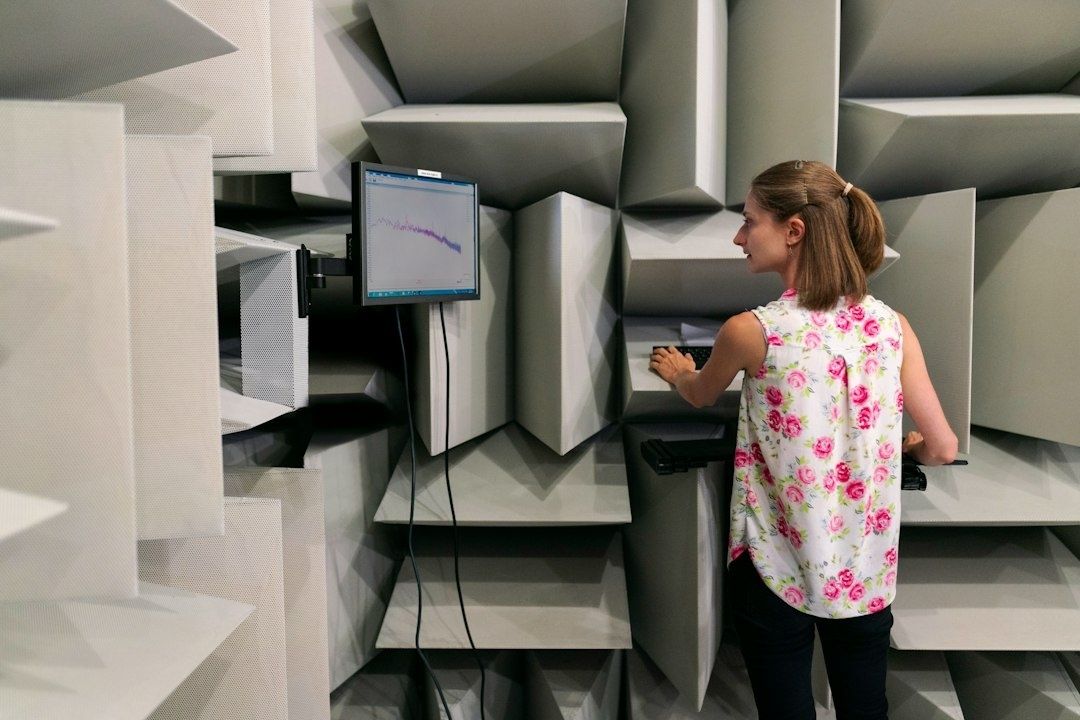
Tactile and multi-sensory interpretation gives visitors more than one way to understand form, material, and spatial relationships.

Tactile access must be carefully curated. Objects should be durable, cleanable, and positioned at an appropriate height. Labels need to explain what can be touched, how it should be handled, and whether an interpretation model is an original, a replica, or a partial representation. Touch should never be added merely as decoration. It should answer a real interpretive question and give visitors information that cannot be gained as effectively through sight alone.

Sound can also support comprehension, but only when it is purposeful. A short directional audio track may explain the rhythm of a performance, the texture of a landscape, or the working process behind an object. Uncontrolled ambient sound can instead create clutter, especially when several tracks overlap. Guided multi-sensory tours offer a more structured solution. Programs such as the Museum of Fine Arts” access tours combine description, touch, sound, and conversation for groups with different disabilities and access needs, demonstrating that multi-sensory interpretation can serve neurodivergent visitors, blind and low-vision audiences, people with cognitive disabilities, and others.

  • Provide raised diagrams, models, or relief panels for major spatial and visual ideas.
  • Use material samples to connect artworks with their physical processes and histories.
  • Offer captions, transcripts, audio description, plain-language text, and visual symbols together.
  • Keep sound sources directional, optional, and clearly identified before visitors enter.
  • Train guides to ask permission before touch-based activities and to accept nonverbal participation.

Actionable Operational Benchmarks for Cultural Curators

Architecture cannot carry the entire responsibility for inclusion. A gallery may have excellent acoustics and still feel inaccessible if staff are uncertain, online information is vague, or visitors are surprised by changes in the environment. Operational practice turns design intentions into something people can rely on. The aim is not to promise a perfectly predictable visit, which is rarely possible, but to explain what visitors can expect and provide options when conditions become difficult.

Quiet mornings and sensory-friendly operating hours can reduce crowd noise, harsh lighting, and pressure to move quickly. They should be scheduled consistently, promoted as a normal public service, and evaluated with participants. Some institutions may need to reduce audio levels, pause interactive elements, increase seating, open additional entrances, or limit capacity during these periods. The same principles can also be incorporated into ordinary opening hours so that access does not depend entirely on a special event.

Staff development is equally important. Training should cover sensory regulation, communication differences, distress signals, nonjudgmental assistance, and proactive de-escalation. Staff do not need to diagnose visitors or interpret every behavior. They need to offer calm choices, reduce unnecessary demands, explain available spaces, and respect a person”s need for distance. The Museum of Fine Arts access tour model also illustrates the value of preparation, customized programming, and clear arrangements for groups.

  1. Audit the visitor journey. Walk through ticket purchase, arrival, security, galleries, toilets, retail areas, and departure while recording sound, lighting, congestion, smells, seating, and information gaps.
  2. Publish sensory information before arrival. Provide a sensory map showing noisy rooms, dark spaces, strong smells, flashing content, narrow passages, lifts, quiet areas, and accessible routes.
  3. Create visual social narratives. Use photographs or simple illustrations to explain where visitors enter, how tickets are checked, what staff uniforms look like, and where a person can pause.
  4. Train and refresh staff skills. Include role-play, neurodivergent-led teaching, guidance on de-escalation, and clear procedures for responding to distress.
  5. Collect specific feedback. Ask what helped, what created barriers, and what visitors would change. Publish actions taken so consultation leads to visible improvement.

Building Welcoming Cultural Spaces for Generations to Come

Multi-sensory design benefits more than neurodivergent visitors. Parents with young children, older adults, people recovering from illness, visitors who are blind or have low vision, people with hearing differences, and anyone overwhelmed by crowds can all benefit from clearer information, softer acoustics, flexible interpretation, and places to rest. Choice improves the experience for everyone because it allows visitors to decide how closely, how quickly, and through which senses they engage with culture.

The next step belongs to cultural boards, architects, curators, educators, facilities teams, and visitors alike. Build neuro-inclusive requirements into capital projects, exhibition briefs, procurement documents, staff plans, and evaluation budgets. Most importantly, maintain ongoing partnerships with neurodivergent creators and advocacy communities. Access is not a finished feature that can be checked off after installation. It is a continuing relationship, shaped by listening, testing, correcting, and designing with the full diversity of public life in view.

Stopping Time: How Archivists Protect Fragile Paper and Pigments from Fading

The Quiet Chemistry That Threatens Our Paper Heritage

Paper often appears sturdier than it really is. A family letter, church register, land deed, photograph, or hand-painted poster may survive for decades in a drawer, yet its fibers and colorants are continually reacting with light, oxygen, moisture, heat, and pollutants. Historical inks can sink into paper, migrate through it, or become chemically aggressive. Pigments may lose their color, while dyes can fade unevenly and leave behind altered images that no longer resemble the original.

These objects carry more than information. They preserve names, relationships, local decisions, artistic traditions, and evidence of ordinary lives. For families and community archives, a handwritten recipe or a school certificate may be irreplaceable even when its monetary value is modest. The encouraging news is that conservation science has identified many of the forces behind deterioration. With thoughtful storage, careful handling, and realistic environmental control, households and small repositories can prevent much of the damage before it becomes irreversible. Even choices about archival and waterproof ink can help explain why some newly created records are better prepared for the future.

Why Colors Fade and Fibers Crumble

Light is one of the most visible causes of fading, but the damage is chemical as well as visual. Ultraviolet radiation carries enough energy to break or alter molecular bonds in dyes, pigments, and paper. Visible light can also contribute to photochemical reactions, especially when exposure is prolonged. The result may be a gradual loss of saturation, a shift from blue to gray, yellowing of paper, or a sharp difference between an exposed margin and a protected area beneath a mat. Once a colorant has chemically changed, lowering the light level later cannot restore it.

Modern pigment-based inks are generally more stable than many dye-based inks because pigments consist of solid particles that are less likely to dissolve, migrate, or break down quickly under light. High-quality pigment printing systems may be designed for very long display life, although actual performance depends on the paper, framing materials, humidity, light intensity, and the specific ink formulation. Dye-based inks can look exceptionally bright when new, but some are more vulnerable to ultraviolet exposure and oxygen. Terms such as “permanent,” “document,” and “waterproof” should not be treated as interchangeable. Waterproofness describes resistance to liquid after drying; it does not automatically promise long-term lightfastness or chemical safety for the paper.

Historical iron gall ink illustrates a different danger. Used widely for centuries, it was made from oak galls, a solvent, ferrous sulfate, and gum arabic. Its blue-black mark was valued for permanence, but poorly balanced or aging formulations can release acid and leave excess iron in the paper. These substances promote hydrolysis and oxidation, shortening cellulose chains and making the support brown, brittle, and weak. Conservators often observe a progression from halos around written lines, to ink showing through the reverse, to cracking and eventual loss of the written areas. Such documents should be handled minimally and assessed by a trained conservator before cleaning, flattening, or repair.

Hands examining an old book with tools and a magnifying glass
Careful examination helps conservators identify chemical deterioration before fragile paper is cleaned, flattened, or repaired.
Ink type Chemical base Typical stability Historical or practical risks
Pigment-based ink Solid color particles suspended in a carrier Often good light resistance when well formulated Can abrade or flake from unsuitable surfaces; quality varies by product
Dye-based ink Colorant dissolved in liquid Often more vulnerable to light and moisture Fading, bleeding, and color shifts may occur over time
Iron gall ink Tannins, iron salts, solvent, and gum arabic Strong initial mark, but chemically unstable in some formulations Acid and iron can corrode cellulose and cause cracking or ink loss
Waterproof ink Varies, often resinous or otherwise water-resistant Resists liquid after drying, but lightfastness varies May bleed, feather, or become brittle depending on formula and paper

How Modern Conservators Predict and Measure Decay

Conservators do not have to rely only on visual judgment when deciding whether a color can safely be exhibited. A microfading tester, or MFT, directs controlled, intense light onto a very small area and measures changes in reflected color. The test accelerates photochemical aging, allowing researchers to estimate how a dye or pigment may behave under gallery lighting. Research described by Yale researchers using microfading technology indicates that roughly one minute of testing can represent about a year of aging under particular exhibition conditions. The exact comparison depends on the instrument and material, but the principle is valuable: vulnerability can be assessed with essentially no visibly altered spot on the artifact.

This information supports practical decisions rather than replacing professional judgment. A highly sensitive photograph might be displayed briefly at a low light level, while a more stable document could remain on view longer. Community archives can use the same logic even without owning specialized equipment by identifying high-risk materials and adopting conservative policies.

  • Record which objects are most light-sensitive, especially colored photographs, textiles, watercolors, and fugitive dyes.
  • Rotate vulnerable materials rather than displaying them continuously.
  • Use copies or high-quality digital surrogates for public handling and frequent exhibitions.
  • Document exposure history, because cumulative light matters even when each individual display seems harmless.

The Science of Microclimates in Collection Care

A microclimate is a small, managed environment inside a case, box, drawer, frame, or enclosure. Instead of forcing an entire building to remain at strict conditions, collection staff can create a more stable space around a sensitive object. Properly sealed enclosures may use conditioned silica gel or another humidity buffer to limit rapid changes in relative humidity. This is especially useful for small museums, historic buildings, and family collections where whole-room climate control is expensive or unavailable.

Temperature and relative humidity should be stable rather than repeatedly rising and falling. Excess humidity encourages mold, corrosion, adhesive failure, and swelling of paper fibers. Very dry conditions can make paper and coatings brittle, while repeated cycles cause materials to expand and contract at different rates. Sustainable collection care can include better building envelopes, shade, improved case seals, data loggers, and object-specific enclosures. Museum examples discussed by the American Alliance of Museums show how localized control can protect sensitive objects while reducing the energy required to condition every gallery equally.

Museum-Grade Practices for Home and Community Archives

Good preservation begins with the enclosure and the surrounding environment. Store paper in a cool, stable, clean location away from attics, basements, kitchens, exterior walls, radiators, and direct sunlight. Avoid ordinary cardboard, newspaper, colored tissue, adhesive-backed albums, and plastic sleeves that become sticky or release damaging chemicals. Look for acid-free, lignin-free folders and boxes made from stable archival paperboard. Polyester, polyethylene, or polypropylene enclosures are generally preferable to unknown plastics, provided the object is not trapped in a humid or poorly ventilated setting.

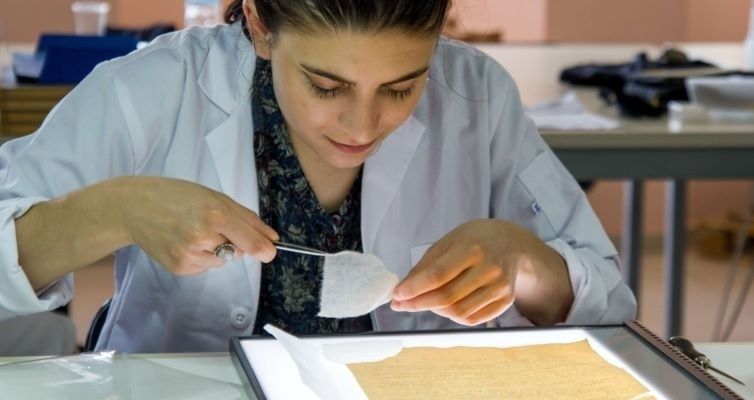
Handling deserves equal attention. Clean, dry hands are appropriate for many paper items because gloves can reduce tactile sensitivity and catch on edges. Nitrile gloves are useful for photographs, metal components, or objects that should not receive skin oils. Cotton gloves are less desirable for delicate paper because they can reduce grip and snag fibers. Support sheets should be used when moving weak, folded, or oversized documents. Never force a page flat, remove a photograph from a stuck album, or apply household tape to a tear. A conservator can recommend safe treatment when the material is brittle, flaking, mold-affected, or historically significant.

  1. Survey before sorting. Note tears, stains, mold, flaking media, unusual odors, and signs of insect activity. Separate actively damaged items from clean material and seek specialist advice if mold is present.
  2. Choose stable containers. Use archival folders, four-flap enclosures, photograph sleeves, and boxes that fit without crushing or excessive empty space. Materials should be labeled as acid-free and preferably lignin-free, with no adhesive touching the original.
  3. Store flat when appropriate. Letters, certificates, and photographs should generally lie flat with adequate support. Oversized works may need a rigid, archival board and a custom enclosure rather than being folded.
  4. Reduce light exposure. Keep originals in darkness for routine storage. When displaying them, use filtered glazing, low illumination, curtains or blinds, and short exhibition periods.
  5. Create access copies. Scan or photograph records carefully, preserve descriptive information, and provide copies for family research or community use. Digital files also need more than one backup and periodic format review.

Commercial products require careful reading. “Archival” on a package is helpful but not always specific enough. Check for acid-free and lignin-free claims, buffered paper when appropriate, and plastic identification. For new writing, a tested document or archival ink is more suitable than choosing solely on the basis of the word “waterproof.” Product performance depends on the pen, paper, drying time, and storage conditions, so an inconspicuous test can reveal feathering or bleed before a significant record is created. Framing also matters: use a window mat so the paper does not touch glazing, avoid wood or acidic backing that is not isolated, and select ultraviolet-filtering glazing when display is necessary.

Preserving Living History for Generations to Come

Preservation is less about costly technical wizardry than about preventing avoidable stress. Darkness during storage, stable humidity, clean enclosures, careful support, and limited handling address the main causes of damage for many paper collections. A simple temperature and humidity log can reveal a damp cupboard or overheated room before mold or brittleness becomes obvious. Regular review also helps families notice changes early, when professional advice is more likely to prevent loss.

Begin with one box, album, or folder. Remove damaging rubber bands and paper clips, place records in appropriate enclosures, identify items needing specialist attention, and make access copies for everyday use. Community groups can share supplies, preservation training, and referrals to regional libraries, archives, or conservators. Each modest step protects evidence of a place, a family, or a tradition. With patient care and sensible environmental control, fragile paper can remain readable, meaningful, and available to future generations.